Best Lashes for Monolid Eyes: Styles That Work
November 3, 2026 · 9 min read
Written by the MissBiotics Beauty Team — probiotic-inspired beauty specialists.
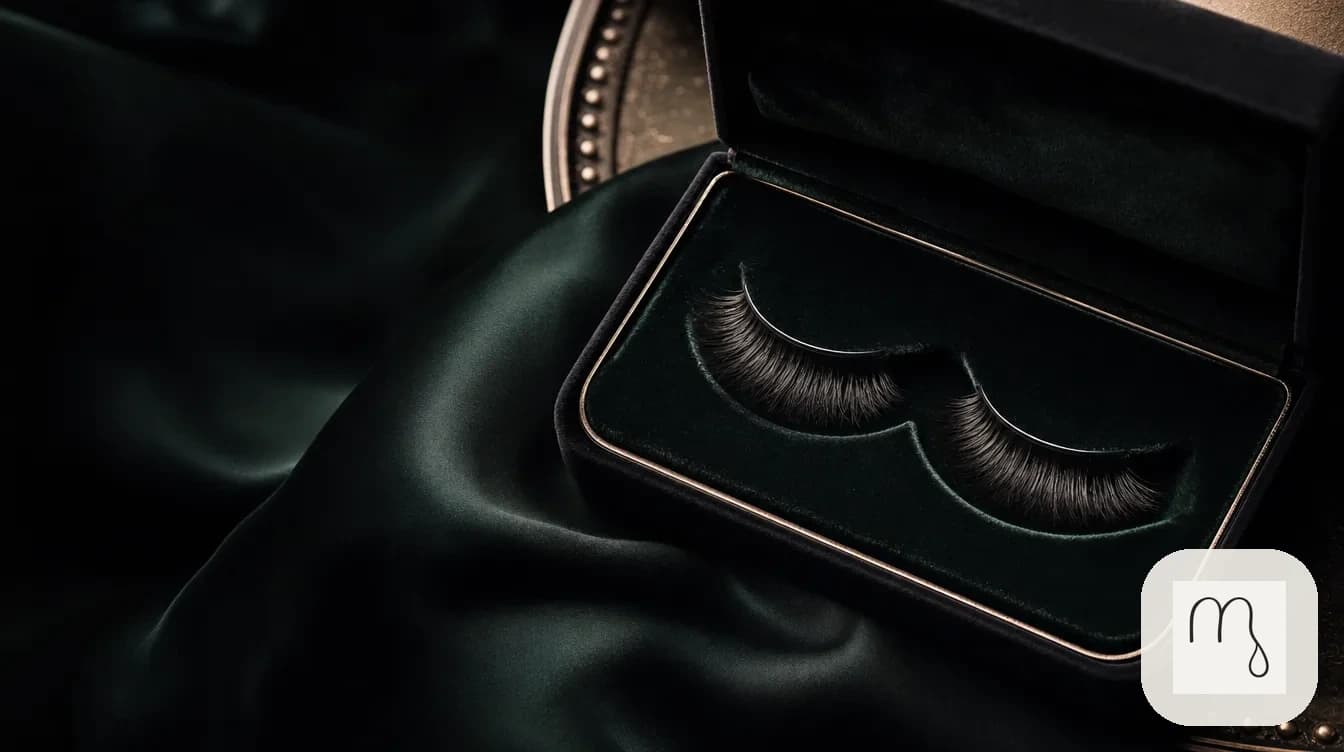
A graduated strip lash, short near the inner corner and flared at the outer corner, is the shape most editors recommend for a monolid lid.
The short answer
The best lashes for monolid eyes are wispy, graduated strips. They stay short near the inner corner and build to a longer, winged outer corner. A lighter band that curls upward opens a flatter lid instead of looking pasted on. For example, a $2.99 wispy strip trimmed to fit usually outperforms a thick, straight-banded style.
What Are the Best Lashes for Monolid Eyes?
At our New York and London counters, we hear one question often: what are the best lashes for monolid eyes? Monolid eyes have an upper lid that doesn't fold back to reveal a crease. So there's less bare skin above the lash line to carry a heavy strip. Furthermore, a style built for a hooded or deep-set eye can look pasted-on here. The whole band stays in view all day instead of partly tucking under a fold. In fact, a strip that's too dense near the inner corner can visually shrink a monolid. Therefore, the right choice usually stays short and wispy near the inner corner. It then builds gradually toward a soft flare at the outer corner. Importantly, none of this means a monolid can't wear a bold lash; it just means the shape has to be chosen on purpose.
Notably, this isn't about one single lash. It's about why a monolid behaves differently from a hooded or almond lid. For example, a lid with more visible skin can carry a heavier, even-density strip. Meanwhile, a monolid has nowhere for extra weight to hide. A thinner, flexible band that curls upward reads as open rather than heavy. As a result, three traits matter most: a wispy inner corner, a subtle outer-corner flare, and a band light enough to curl with the eye. In practice, most customers only need to adjust one of those three traits to see a noticeable difference by the end of a full day of wear.
Why the Best Lashes for Monolid Eyes Build From the Inner Corner Out
A standard strip lash is often even in length from corner to corner. This suits a lid with more skin above the lash line. However, that same even shape can overwhelm a monolid, since there's no fold to absorb the extra density. Instead, a graduated style starts short at the inner corner and lengthens toward the outer corner. For instance, this traces the same gentle cat-eye line many beauty editors recommend for a flatter lid.
Why Monolid Eyes Need a Different Lash Shape
Monolid eyes are defined by an upper lid that doesn't form a visible crease. Skin covers the lash line smoothly from brow to lash tip. As a result, there's little room to hide a thick band. Whatever sits on the lid stays fully visible once your eyes are open. Additionally, a heavy, uniform-density strip can flatten the eye further, since it adds weight without a crease to break up the line. In contrast, a lash with varying length builds visual depth. It creates the illusion of a soft fold where there isn't a physical one.
Flare matters because the outer corner is usually the most expressive part of a monolid. Consequently, concentrating length and a slight upward curl there lifts the gaze. Meanwhile, a thinner, more pliable band sits closer to the natural lash line. It curls with the eye rather than fighting a flatter angle. In other words, how the band flexes matters as much as how long the lashes are.
Our guide to lash styles for every eye shape covers this across hooded, round and almond lids, too. That said, monolids vary from person to person. Some have more lid space than others, and natural lash length differs too. Therefore, trimming and testing a strip before a full look still matters most. For example, curling your natural lashes before the strip goes on helps the two blend together, instead of creating two separate lash lines.
Wispy, Graduated Styles That Build to a Subtle Cat-Eye
A wispy, graduated strip is one of the most dependable shapes for a monolid. A budget-friendly option like Red Cherry Eyelashes - Style 19, $2.99, mixes varied, feathery lengths rather than one uniform row. Because the fibers mix short and long strands, the strip naturally reads as wispy near the inner corner.
Furthermore, a human-hair style like Amina Human Hair Eyelashes - Style 12, $3.99, keeps the band light enough for a flatter lid. A lighter fiber flexes with the eye's natural curl instead of sitting rigid. For instance, lashes that curl upward rather than project straight out tend to open a monolid's gaze. The lift reads as more noticeable than raw length alone.
At our counters in 2026, a customer who'd always found strip lashes 'too much' tried a wispy, graduated style. We trimmed it slightly shorter at the inner corner. Notably, she said it was the first lash that didn't feel like it was fighting her eye shape by midday. Similarly, several other monolid customers have told us the same thing once the inner corner was trimmed correctly, rather than left at the strip's original length.
Band Weight and Curl for a Flatter Lid
Band weight affects comfort as much as appearance on a monolid. The Amina Faux Mink Lashes - Style 07, $9.99, offers soft volume in a faux-mink fiber. It's noticeably more flexible than many synthetic strips. Because the band bends rather than holding a rigid shape, it follows a flatter lid's curve instead of standing away from the eye.
Curl direction matters too. A strip with an upward curl, rather than one that projects straight outward, tends to suit a monolid's angle better. Instead of fighting the eye's natural line, an upward curl echoes the slight lift a winged liner already creates at the outer corner.
For comparison, our guides on lashes for hooded eyes and lashes for round eyes take a different approach. Those lids have more visible skin above the lash line. In contrast, a monolid's flatter angle calls for a softer curl and a lighter band, not more overall volume.
Trimming and Application Angle Tips for Monolid Eyes
Even the best lashes for monolid eyes usually need trimming first. Measuring the strip against your own lash line, then trimming from the outer end, preserves the graduated shape that makes a wispy style work. Our guide on trimming false lashes to fit walks through the exact process.
Placement angle matters just as much as trimming here. A monolid's lash line can disappear slightly once the eyes are open. So setting the band at a gentle upward angle toward the outer corner, rather than flat, helps the flare read clearly. Additionally, running a thin liner along the lash line before the lash goes on can disguise any small gap. For instance, a line that extends just past the strip's outer edge stretches the flare, without adding more physical lash length. Moreover, holding a mirror at eye level, rather than looking down into it, makes it far easier to judge that angle accurately before the glue sets.
Glue choice affects how visible the band looks, too. The Nabi Eyelash Glue Liner - Black, $6.99, doubles as a thin liner. It helps the strip's edge blend into the lash line, where there's no crease to hide a gap. Meanwhile, the Celavi Eyelash Tool Set, $9.99, includes trimming scissors and an applicator. These make the inner-corner cut easier to get right the first time.
However, humidity and natural oil around the eye area can loosen a glue bond faster on hot or humid days. For example, blotting the lid lightly with a tissue before application removes excess oil that weakens hold. Similarly, storing a trimmed strip flat in its original tray between wears helps it keep its curl and shape for the next use.
When Drama Still Works: Special-Occasion Styling and Safety
A dramatic, full-volume mink-style lash isn't off-limits for a monolid. It's a matter of styling technique, not a ban. For a wedding or a night out, a fuller strip can still work beautifully once it's trimmed and angled correctly.
The Amina Faux Mink Lashes - Style 20, $9.99, offers a fuller faux-mink look suited to a special occasion. However, even a dramatic style benefits from the same inner-corner trimming used on an everyday lash. That way, extra volume concentrates at the outer corner, where a monolid can carry it, rather than overwhelming the whole lid.
That said, no lash style permanently changes eyelid structure. It won't create a crease that isn't physically there. A strip lash is a styling tool, not a structural fix, and a very heavy style can still overwhelm a monolid without the correct trim. Consequently, we'd rather send a customer home with a smaller, well-trimmed strip than a dramatic one that fights their lid shape all evening.
Strip lashes sit directly on the eyelid margin, so hygiene matters regardless of eye shape. The FDA's eye cosmetic safety guidance advises against sharing eye makeup or applicators, and stopping use if irritation develops. Additionally, a retrospective analysis published via NCBI/PMC found that cosmetic adhesives are a recognized cause of allergic skin reactions. So patch-testing a new glue is a reasonable precaution. The NHS page on conjunctivitis notes that redness, itching or sticky discharge can signal irritation. That's reason enough to remove a lash and stop use. Meanwhile, Cleveland Clinic's guidance on lash safety notes eye-area treatments carry more risk than makeup applied elsewhere, since skin there is thinner. For persistent redness or swelling, see a dermatologist or ophthalmologist rather than continuing to wear lashes through it.
How MissBiotics Can Help
We built this guide because the same question comes up constantly at our counters in 2026. What actually works for a monolid, not just a textbook almond eye? Our answer to the best lashes for monolid eyes question starts with shape, not drama. For a wispy, graduated silhouette, we point customers toward the Red Cherry Eyelashes - Style 19, $2.99. For an even lighter band, we suggest the Amina Human Hair Eyelashes - Style 12, $3.99.
To be upfront, MissBiotics sells strip lashes exclusively. We don't carry cluster, half or magnetic styles, so every pick above still needs trimming and gluing at home. The Amina Faux Mink Lashes - Style 07, $9.99, covers everyday volume, while the dramatic Amina Faux Mink Lashes - Style 20, $9.99, covers special occasions. The Celavi Eyelash Tool Set, $9.99, makes trimming either one easier.
Furthermore, our team can walk through fit and trimming for your specific lid shape. Book a free consultation rather than guessing from a product photo alone. Browse the full Lashes edit to compare every strip and glue option side by side.
Conclusion
So, what should you actually look for? In short, a wispy, graduated shape that builds to a subtle cat-eye flare works better on a monolid than one uniform length. A lighter band that curls upward, trimmed at the inner corner, tends to open the eye rather than weigh it down. For a special occasion, a fuller mink-style lash can still work once it's trimmed and angled the same way.
Ultimately, no single style suits every monolid. Some trial and error is normal, even with a well-suited shape. Browse the Lashes edit to compare styles, or book a free consultation for a fit matched to your own lid.
Questions, answered
What are the best lashes for monolid eyes?+
The best lashes for monolid eyes are wispy, graduated strips that stay short at the inner corner and build to a longer, winged outer corner. That shape, paired with a lighter band that curls upward, tends to open a flatter lid rather than overwhelm it. A $2.99 wispy strip like Red Cherry Style 19 is a reasonable starting point. Trimming at the inner corner still matters, since monolid length varies from person to person.
Can false lashes make monolid eyes look smaller?+
Yes, a heavy, uniform-density strip can make monolid eyes look smaller, since there's no crease to absorb the extra weight. Instead, a graduated style that stays lighter near the inner corner avoids that effect. In practice, length and density matter more than overall drama. A wispy, flared shape almost always reads as more open than a thick, even strip.
Should false lashes for monolid eyes be longer or shorter?+
Lashes for monolid eyes generally work best shorter near the inner corner and longer toward the outer corner, not uniformly long. A gradual build keeps the shape from overwhelming a flatter lid. For instance, a fully uniform, very long strip can look dramatic in the package but heavy once worn. Trimming the inner corner before application usually helps, regardless of the style chosen.
Do I need to trim false lashes for a monolid eye shape?+
Most strip lashes need trimming to fit a monolid eye shape properly. Measuring the strip against your own lash line and cutting from the outer end preserves the flare that makes a graduated style work. Our guide on trimming false lashes to fit covers the exact steps. Skipping this step is the most common reason a good lash still looks wrong on a flatter lid.
What lash band works best for a flat eyelid with no crease?+
A lighter, more flexible band works best for a flat eyelid with no visible crease. A thinner band curls with the eye instead of sitting rigidly away from the lid. In fact, faux-mink and human-hair fibers tend to flex more easily than thicker synthetic strips. That flexibility matters more than fiber type alone for all-day comfort.
Can I still wear dramatic mink-style lashes with monolid eyes?+
Yes, dramatic mink-style lashes can still work with monolid eyes for special occasions. It's a question of trimming and angling the strip correctly, not a ban on fuller styles. However, a very heavy strip without the right trim can still overwhelm a flatter lid. Concentrating volume at the outer corner, rather than spreading it evenly, usually gives the best result.
How do I keep lash glue from showing on a monolid eyelid?+
Choosing a glue that doubles as a thin liner, like a black lash adhesive, helps hide the line where the strip meets the lash line. Running a thin liner along the lash line before application also closes any small gap. Additionally, letting the glue become tacky before placing the strip reduces visible residue. For persistent irritation from any adhesive, a dermatologist or ophthalmologist can advise further.
Sources & further reading