Cream vs Liquid Concealer: Better for Blemishes?
September 29, 2026 · 9 min read
Written by the MissBiotics Beauty Team — probiotic-inspired beauty specialists.
The short answer
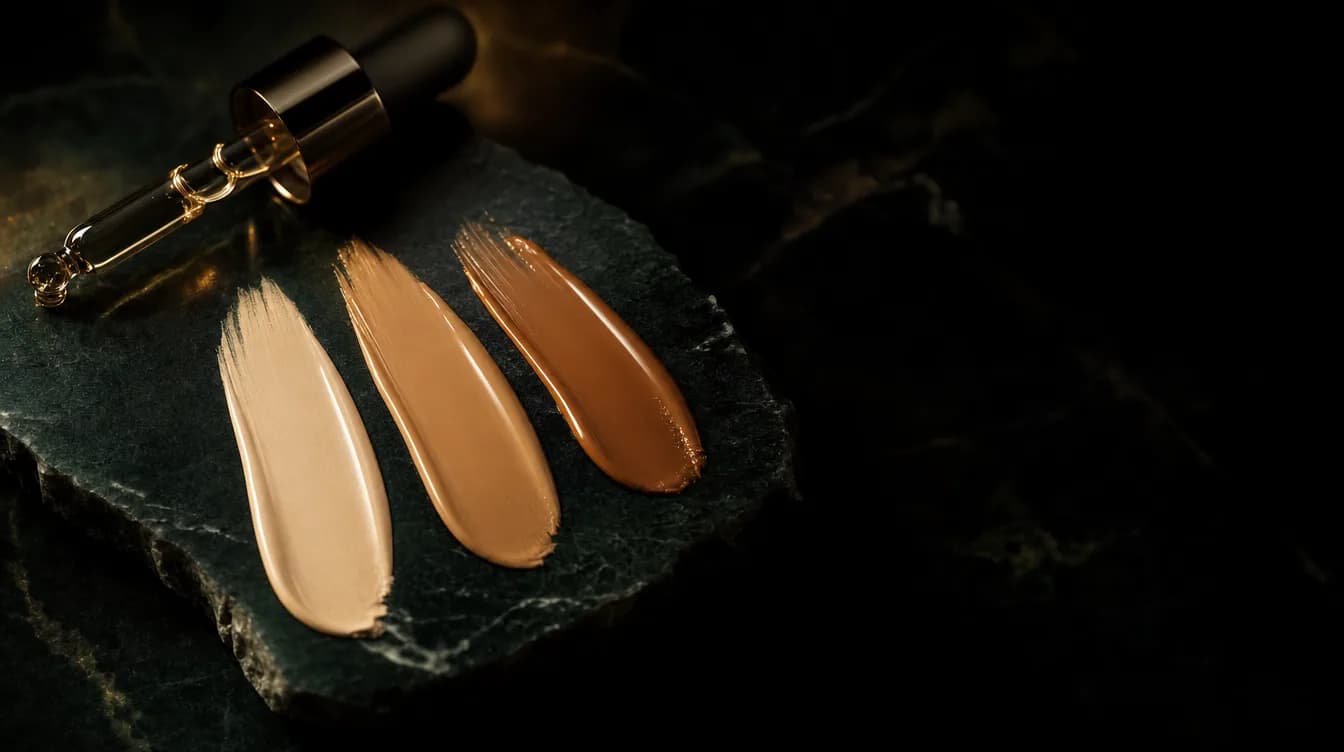
Cream vs liquid concealer is not a clean two-column choice inside our own catalog: only one of our four concealers, the $40 SMOOTH Crème Duo, states a cream texture outright, while two $4.99 Nabi formulas use fast-drying, non-cakey, brush-applied wording that points toward a liquid-style fluid without using that exact word. Cream formulas build heavier, more concentrated coverage over one spot, while thinner fluid formulas blend faster across a wider area. Check the product's own description before you buy if texture matters to you as much as the shade.
Cream vs Liquid Concealer: Which Gives Better Blemish Coverage?
Cream vs liquid concealer is the question that stalls a lot of shoppers standing in front of two very different-looking tubes. Notably, the two textures behave differently once they meet a blemish. In fact, a cream formula usually sits in a pot, stick or duo and layers thicker for targeted spot coverage. A fluid or liquid-style formula instead comes in a slim tube with a wand or brush, spreading thinner and often setting faster. Consequently, picking the wrong texture can mean either a cakey patch sitting on top of a blemish or coverage that fades away by lunch. At our counters in New York and London, this is one of the most common face-makeup questions we hear, right after shade matching.
How Cream vs Liquid Concealer Textures Differ in the Tube or Pot
Packaging is often the fastest clue to what is inside. Notably, a squeeze tube with a doe-foot or brush applicator usually signals a thinner, faster-blending fluid formula, since it needs to flow smoothly from the tip. Meanwhile, a compact, stick or dual-tipped pot is the classic home for a heavier, wax-based cream built to be packed on with a finger, sponge or brush. In practice, a fluid formula blends more easily across a wider area, like under the eyes. A cream formula, however, is easier to concentrate precisely over one raised blemish.
What Cream Concealer Is Actually Built to Do for Blemishes
Cream concealer exists to build strong, targeted coverage over one specific spot. Specifically, its higher wax content lets it sit on the surface rather than sinking in right away. Furthermore, that surface-level sit is exactly what makes it easier to pat and build directly over a raised or discolored blemish without disturbing the coverage already there. As a result, a single pat-and-build motion, using a finger or dense brush, often covers a stubborn spot more completely than one swipe of a thinner formula. Results still vary with how oily or dry the surrounding skin is.
MissBiotics carries one product that names its texture directly. The SMOOTH® Crème Concealer & Foundation Duo, $40, states outright that its concealer half is a crème formula, paired with a matching foundation in the same travel-friendly tube. Notably, this is the only concealer in our current range whose own listing uses the word crème. Consequently, if you specifically want a cream formula because you already know how it performs on your skin, this is the product to check first.
That said, a heavier cream formula is not without trade-offs. For instance, if the wax content is not blended carefully into surrounding skin, a cream concealer can sit visibly on top of texture rather than melting in. Also, a richer cream can feel heavier through a long day on genuinely oily skin. However, that same wax-forward build is precisely why cream formulas remain a common recommendation for covering one stubborn spot rather than an entire complexion.
What Liquid-Style Concealer Is Actually Built to Do
Liquid and fluid concealers take a different approach, prioritizing quick, even coverage over heavy buildup. Most fluid formulas are thinner from the first swipe, letting them spread across a wider area like under-eye shadows or general redness. Meanwhile, a built-in wand or brush applicator, rather than a finger or separate tool, lets you place product exactly where needed and blend it on contact.
Two MissBiotics products lean this direction by design, even without the word liquid printed on the label. The Nabi All in One Concealer with Brush, $4.99, and the Nabi All in One Correcting Concealers with Brush, $4.99, both use an attached-brush wand, the packaging format built for a thinner, faster-blending fluid rather than a scoopable cream. Both listings describe the formula as lightweight, fast-drying and non-cakey. Notably, that combination, thin enough to dry fast, is a hallmark of a fluid rather than a wax-heavy cream, even though neither listing uses the exact word liquid.
The correcting version adds color theory to the same lightweight base. It comes in Lavender, Teal, Orange and White, shades built to counteract redness, dark circles or dullness before a skin-tone concealer goes on top. In practice, that makes it a companion step rather than a stand-alone finishing product.
Consider a shopper at our London counter last week who wanted one concealer for a humid daily commute. For example, she needed coverage that would not slide off a blemish by midday. Additionally, she wanted something light enough to layer under a full face without looking heavy by evening. In this case, we started her with the Nabi All in One Concealer with Brush, since its fast-drying, non-cakey description suited a warmer climate better than a heavier cream. Meanwhile, we kept the SMOOTH Crème Duo in reserve for evenings when she wanted longer-wearing spot coverage instead.
The Honest Answer: What Our Own Product Descriptions Actually Say
So which formula wins for blemish coverage? We checked our own product listings rather than guessing, and the honest answer is that our catalog does not split neatly into two labeled camps. Only one concealer, the SMOOTH® Crème Duo, states its texture outright. The two Nabi formulas point strongly toward a liquid-style fluid through their attached-brush packaging and fast-drying, non-cakey wording, but neither listing uses the word liquid itself. We would rather say so plainly than overstate a claim our own copy does not make.
A fourth product complicates the picture further. The AMAZINGCONCEALER, $32, describes itself as ultra-concentrated, water-resistant and breathable, built for full coverage with minimal product. Notably, its own listing does not specify cream or liquid at all. If texture format matters to you as much as the coverage claim, check current swatches or ask our team before you buy.
In short, one product in our range is confirmed cream. Two are built like liquid formulas without using that exact word. One does not specify texture either way. That is a more honest map of the cream vs liquid concealer question than a tidy two-column chart would give you, and it is the map our actual product pages support.
How to Choose Between Cream and Liquid Concealer for Your Skin
Matching texture to your actual skin and blemish type matters more than chasing a label. If you have one or two stubborn, raised blemishes and generally normal-to-dry skin, a cream formula is worth trying first. For instance, the SMOOTH® Crème Duo's buildable formula is designed to concentrate coverage exactly where you pat it.
If you have broader redness, dark circles or oily, blemish-prone skin overall, a lighter, faster-blending formula usually wins instead. Both Nabi formulas are priced at $4.99, making it inexpensive to test whether a thinner, brush-applied concealer suits your skin better than a cream. Furthermore, the correcting version is worth trying first if redness, not just texture, is your main concern.
Some shoppers reach for a dedicated tool instead of relying on a finger or built-in wand. Our Concealer Brush, $15, has a compact, precise head built for patting cream or fluid formulas exactly onto a spot or a dark circle. Meanwhile, our guide on concealer or foundation first covers the application order that keeps either texture from patching.
Some shoppers also like to combine textures rather than choose only one. For instance, a thin layer of a fluid concealer under the eyes paired with a small dab of cream concealer over one blemish can cover both needs without looking heavy anywhere. In fact, that layering approach borrows the same logic professional makeup artists use: thin where you need to blend, thicker where you need to hide something specific. However, layering two concealers works best when both are non-comedogenic, since doubling up on any formula adds more product sitting on blemish-prone skin.
Keeping Blemish-Prone Skin Safe While You Test Formulas
Whichever texture you land on, non-comedogenic labeling matters more than the texture decision ever will on genuinely blemish-prone skin. Clogged pores happen when oil, dead skin cells and product residue build up inside a hair follicle, according to the Cleveland Clinic. Additionally, the Cleveland Clinic notes that choosing products labeled non-comedogenic or oil-free is one practical way to lower that risk on skin already prone to breakouts.
The American Academy of Dermatology adds that wearing makeup over acne-prone skin is generally fine, provided you choose non-comedogenic formulas and remove them fully before bed. Furthermore, the AAD specifically recommends never sharing makeup, brushes or applicators, since that habit alone can reintroduce bacteria and oil onto otherwise clean skin. Moreover, the FDA notes that cosmetic ingredients do not require pre-market approval the way drugs do, which is part of why reading a product's own label and claims carefully is worth the extra minute.
If a new concealer formula leaves skin more irritated or broken out than before, stop using it and let skin recover. The NHS notes that acne can range from mild to significant, and that persistent or worsening breakouts are worth discussing with a doctor rather than managing through makeup alone. See our guide on stopping concealer from creasing under the eyes for more on gentle, skin-friendly application.
Storage matters too, regardless of which texture you choose. For example, keep any concealer tube or pot away from direct heat, since warmth can separate a cream formula's wax and oil components over time. Additionally, replace the sponge or brush you use to apply concealer regularly, since a dirty applicator can reintroduce bacteria onto freshly cleansed skin. In practice, a clean applicator matters just as much as a clean formula on skin that is already blemish-prone.
How MissBiotics Can Help
We built this comparison because shoppers keep asking the same question at our counters. Is cream or liquid concealer actually better for a blemish? For most customers, the honest answer is that it depends on the spot and the surrounding skin. The SMOOTH® Crème Concealer & Foundation Duo, $40, is our clearest cream pick and the only listing in the range that states its own texture.
Shoppers who want an inexpensive way to test a lighter, faster-blending formula should start with the Nabi All in One Concealer with Brush, $4.99. Its attached brush and fast-drying, non-cakey description make it an easy first swap if a heavier cream has felt like too much on oilier days. Furthermore, our team can walk you through which texture suits your specific skin and blemish pattern. Book a free consultation for a personal match.
Browse the full Face edit to compare all four concealers side by side, from $4.99 to $40. Or book a free consultation for a recommendation matched to your skin rather than a label. Importantly, none of these listings claim to treat or prevent acne; they are coverage products, not medical treatments.
- SMOOTH® Crème Concealer & Foundation Duo, $40 — confirmed crème formula, 2-in-1 with foundation, five shades.
- AMAZINGCONCEALER, $32 — ultra-concentrated, water-resistant and breathable; texture unspecified on its own listing.
- Nabi All in One Concealer with Brush, $4.99 — lightweight, fast-drying, non-cakey, attached brush.
- Nabi All in One Correcting Concealers with Brush, $4.99 — same lightweight formula in color-correcting Lavender, Teal, Orange and White.
- Concealer Brush, $15 — compact head for precise cream or fluid application.
Conclusion
So, does the cream vs liquid concealer debate have one universal winner? Not really, and our own product pages back that up rather than a marketing claim. Only the SMOOTH® Crème Duo confirms cream texture outright. Both Nabi formulas point toward a liquid-style fluid through their fast-drying, non-cakey, brush-applied design, without using that exact word. AMAZINGCONCEALER does not specify either way. Matching a formula to your actual blemish and skin type, not to a label, is what makes any concealer purchase in our $4.99-to-$40 range a smart one.
Additionally, always choose non-comedogenic formulas if your skin is genuinely blemish-prone, and never share concealer, brushes or applicators. Wash your hands before application, and see a dermatologist if breakouts persist or worsen despite a careful routine. Browse the full Face edit to compare all four concealers side by side, or book a free consultation for a recommendation matched to your skin.
Questions, answered
What is the actual difference between cream and liquid concealer?+
Cream concealer uses more wax to build thick, concentrated coverage over one spot, while liquid concealer uses a thinner base that spreads faster across a wider area. Packaging is a useful clue: a compact, stick or pot usually holds a cream formula, while a squeeze tube with a wand or brush usually holds a thinner fluid. Neither texture is universally better; each is built for a different kind of coverage. Checking the product's own description remains the most reliable way to know which one you are buying.
Is cream or liquid concealer better for covering a single blemish?+
Cream concealer is generally easier to build up over one raised or discolored spot, since its higher wax content sits on the surface and layers without sinking in. Liquid or fluid concealer can still cover a blemish well, but it usually needs a second light pass to match a cream formula's opacity in one area. For broader redness or under-eye coverage, a thinner fluid formula typically blends more evenly. Your best pick depends on whether you are targeting one spot or a wider area.
Which MissBiotics concealer is confirmed to be a cream formula?+
The SMOOTH® Crème Concealer & Foundation Duo, $40, is the only concealer in our current range whose own product listing states a crème texture directly. It pairs the concealer with a matching foundation in one travel-friendly tube. No other concealer in our catalog uses the word cream or crème in its description. If a confirmed cream texture matters to your buying decision, this is the product to start with.
Are the Nabi concealers liquid formulas?+
Neither Nabi listing uses the exact word liquid, so we cannot claim that outright. Both the Nabi All in One Concealer with Brush and the Nabi All in One Correcting Concealers with Brush are described as lightweight, fast-drying and non-cakey, and both use an attached-brush wand, a packaging format typically built for a thinner, more fluid formula. That combination points strongly toward a liquid-style texture without confirming it word for word. If you want certainty, the product's current packaging and swatch photos are the best reference.
What does non-comedogenic mean, and does it matter for concealer?+
Non-comedogenic means a product is formulated to be less likely to clog pores, according to the Cleveland Clinic. It matters for concealer because clogged pores from trapped oil, dead skin and product residue are one common contributor to breakouts. Choosing a non-comedogenic label is one practical step for blemish-prone skin, alongside removing makeup fully at night. It is not a guarantee against breakouts, since many factors affect skin beyond one product choice.
How do I stop concealer from creasing or caking over a blemish?+
Apply a thin layer first and build coverage gradually rather than applying one heavy layer, since thin layers set more evenly on raised or textured skin. Pat rather than drag the product, especially with a cream formula, to avoid pushing it into fine lines or texture around the blemish. Setting powder applied sparingly can also help a formula, cream or liquid, stay put through the day. Our full guide on stopping concealer from creasing under the eyes covers technique in more depth.
Should I see a dermatologist about my blemishes instead of relying on concealer?+
Concealer can cover the visible appearance of a blemish, but it does not treat, cure or prevent acne itself, since it is a cosmetic coverage product rather than a medical treatment. If breakouts are frequent, painful or leaving marks despite a gentle skincare routine, see a dermatologist or GP for a proper diagnosis and treatment plan. The NHS and AAD both recommend professional care for acne that does not improve with basic skin care. Persistent or worsening breakouts are always worth a real conversation with a clinician rather than makeup alone.
Sources & further reading