What Glue to Use for Eyelash Extensions and False Lashes
November 17, 2026 · 9 min read
Written by the MissBiotics Beauty Team — probiotic-inspired beauty specialists.
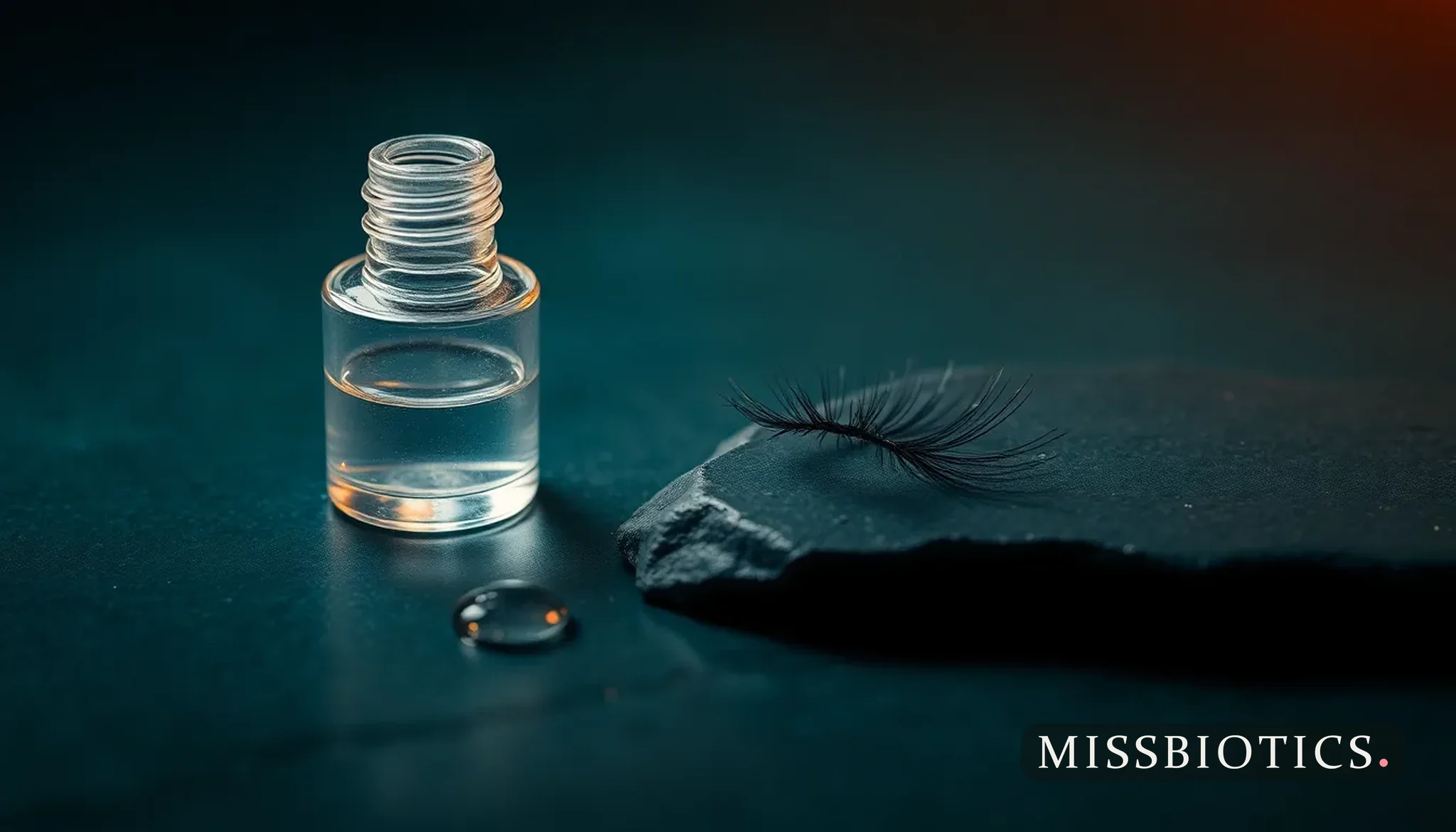
The right adhesive is the difference between lashes that sit flush all day and lashes that lift by lunchtime.
The short answer
What glue to use for eyelash extensions depends on the type of lash. Professional semi-permanent extensions use a medical-grade cyanoacrylate adhesive applied only by a trained technician, and you should never buy or apply that yourself. For at-home strip or cluster lashes, use a dedicated latex or latex-free strip-lash adhesive, which bonds the band to your lash line and peels away cleanly at night.
What Glue to Use for Eyelash Extensions, Explained
What glue to use for eyelash extensions is one of the most searched lash questions, and the honest answer starts with a distinction that most results skip. The word "extensions" is used for two very different things: salon-applied semi-permanent extensions, and the at-home false lashes you apply yourself. Furthermore, each one needs a completely different adhesive, so getting the category right matters more than any single brand.
Professional eyelash extensions are individual synthetic fibres bonded to your own lashes, one by one, by a trained lash technician. Therefore the adhesive involved is a fast-curing, medical-grade cyanoacrylate that is only safe in expert hands. By contrast, at-home false lashes sit on a thin band or in small clusters and are designed to be removed the same night, so they use a gentler, temporary strip-lash glue.
What glue to use for eyelash extensions versus false lashes
If you mean salon extensions, the short answer is that you do not choose or buy the glue at all; your technician does, and it should never be sold for home use. However, if you mean at-home strip or cluster lashes, you want a purpose-made lash adhesive, never nail glue, eyelash extension cyanoacrylate, or craft glue.
At MissBiotics we sell the second category: safe, temporary waterproof lash adhesives made for the band of a false lash. Consequently the advice below focuses on at-home application, which is where most people actually need help.
Why extension adhesive is a professional-only product
Semi-permanent extension glue cures in seconds and holds for weeks, which is exactly why it is risky. The fumes can irritate the eyes during application, and the bond is far too strong to peel off at home without damaging your natural lashes. Additionally, the United States Food and Drug Administration notes that products used near the eye deserve extra caution because the area is delicate and infection-prone.
The safety case for leaving extensions to a technician
A lash technician keeps the adhesive away from your skin, works on closed eyes, and uses a formula matched to humidity and sensitivity. Moreover, they can spot an allergic reaction early. For these reasons, buying extension glue online to do it yourself is a false economy that often ends in irritation, contact dermatitis, or lash loss.
Is eyelash glue stronger than nail glue?
No, and the comparison is dangerous. Nail glue is formulated for a hard keratin surface, not for skin near your eyes, so it is far more irritating and must never touch the lash line. Strip-lash glue, by contrast, is designed to flex with your eyelid and release cleanly. Therefore you should only ever use a product labelled as eyelash or lash adhesive on your lashes.
Choosing the right false-lash glue for your eyes
For everyday false lashes, three choices matter: latex or latex-free, clear or black, and brush-on or pen. First, consider latex. Latex adhesives are flexible and forgiving, which makes them friendly for beginners, but a minority of people are sensitive to latex. Latex-free formulas avoid that risk and suit sensitive or reactive eyes.
Clear versus black, and brush-on versus pen
Clear adhesive dries invisible and is the safest pick when you want a natural finish, so most beginners should start there with a clear waterproof lash glue. Black adhesive dries like a thin eyeliner and hides the band on a dramatic look, which is why our black waterproof lash glue pairs well with a full lash.
Brush-on tubes give you control for strip lashes, while a glue-liner pen doubles as eyeliner and adhesive in one. For a precise, beginner-friendly option, an adhesive that works like a liner can make placement far easier.
Lash glue for beginners: what to prioritize
If you are new, prioritize a clear, waterproof, latex-free formula with a fine brush. Additionally, buy a fresh tube every three to four months, because adhesive thickens and weakens as it ages. You can browse the full range in the Lashes collection and pair any glue with a comfortable faux mink style.
How to apply false-lash glue without lifting
Application technique matters as much as the glue itself. First, measure the lash band against your eye and trim any excess from the outer edge. Next, apply a thin line of adhesive along the band, not your eyelid, and add a touch more at the inner and outer corners where lift usually starts.
The tacky-wait rule
Here is the step most people miss: wait twenty to thirty seconds until the glue turns from wet and glossy to tacky and matte. Then lay the band as close to your natural lash line as you can and press the corners down. Consequently the bond sets instantly instead of sliding, which is the single biggest fix for lashes that lift. Our step-by-step guide on how to apply strip lashes walks through the full routine.
Patch test and hygiene
Before a first use, dab a little adhesive on your inner arm and wait a day to rule out a reaction, because lash glues can cause contact dermatitis in sensitive people. Furthermore, never share adhesive or lashes, and stop immediately if your eyes sting, water, or redden.
How to remove lash glue safely at the end of the day
Removal is part of choosing the right glue, because a good strip-lash adhesive is designed to come off without a fight. Never pull a lash straight off, since tugging the band strips your natural lashes with it. Instead, soften the bond first and let the lash release on its own.
The soak-and-peel method
Soak a cotton pad in warm water or a gentle, oil-based or micellar makeup remover and hold it against the lash line for twenty to thirty seconds. Then ease the band away from the outer corner inward. Afterwards, peel the softened glue strip off the band so the lashes are clean and ready to store.
For the eye itself, close it and sweep a fresh remover-soaked pad gently along the lash line to lift any leftover adhesive. Consequently your skin stays calm and your lashes stay intact for the next wear.
Be gentle with the eye area
Rubbing or picking at dried glue can irritate the delicate eyelid skin and, over time, contribute to blepharitis or contact dermatitis. Therefore take the extra thirty seconds to dissolve the bond properly. If adhesive gets into the eye or your eye becomes sore, rinse with clean water and seek advice from a pharmacist or eye-care professional.
Common lash-glue mistakes to avoid
Most lash fails trace back to the adhesive step, not the lashes themselves. Fortunately, each mistake has a simple fix once you know it. Above all, patience with the glue beats speed every time.
Using too much, or skipping the tacky wait
A thick bead of glue takes longer to set and squeezes out along the lid, which is why bands slide. Use a thin, even line and then wait for it to turn tacky. Similarly, applying lashes while the glue is still wet is the number-one reason they lift at the corners.
Reaching for the wrong product is the other big error. Never substitute nail glue, craft glue or extension cyanoacrylate for a proper strip-lash adhesive; they are not formulated for the eye area and can cause real harm.
Keeping glue past its best
Adhesive thickens, yellows and loses grip as it ages, so a tube that no longer holds is usually just old. Replace it every three to four months, store it tightly closed, and keep the nozzle clean. A fresh clear waterproof glue solves more lifting problems than any application trick.
How MissBiotics Can Help
We stock a focused range of safe, waterproof strip-lash adhesives rather than professional extension glue, because at-home application should stay simple and reversible. For a natural day look, reach for a clear waterproof lash glue; for a bold band, a black waterproof adhesive doubles as a liner. Pair either with a style from the Lashes collection, and if you want help matching a glue to your sensitivity, book a free consultation with our beauty team.
Conclusion
So, what glue to use for eyelash extensions comes down to which lashes you mean. Leave semi-permanent extension adhesive to a trained technician, and for at-home false lashes choose a dedicated, waterproof, latex-free strip-lash glue and respect the tacky-wait rule. Get those two things right and your lashes will sit flush from morning to night. Explore the Lashes collection to find your pair and the adhesive to match.
Questions, answered
What glue to use for eyelash extensions at home?+
For at-home false or strip lashes, use a dedicated strip-lash adhesive, ideally clear, waterproof and latex-free. Never use professional semi-permanent extension cyanoacrylate at home, and never use nail glue, as both are unsafe near the eye.
Is eyelash glue stronger than nail glue?+
No. They are formulated for completely different surfaces. Nail glue is made for hard keratin and is too harsh for skin near the eyes, while eyelash glue is made to flex with the eyelid and peel away cleanly. Only ever use a product labelled as lash adhesive on lashes.
What is the best lash glue for beginners?+
A clear, waterproof, latex-free brush-on adhesive is the most forgiving choice. It dries invisible, resists sweat and tears, and avoids the latex sensitivity some people have. Replace the tube every three to four months for a reliable bond.
How long does strip-lash glue last on the eyes?+
A good waterproof strip-lash adhesive holds for a full day of normal wear, roughly eight to sixteen hours. Remove it the same night by soaking the band in warm water or a gentle makeup remover rather than pulling, which protects your natural lashes.
Can I be allergic to eyelash glue?+
Yes. Lash adhesives can trigger contact dermatitis, redness or watering, especially latex formulas. Patch test on your inner arm a day before first use, choose a latex-free formula if you are sensitive, and stop at once if your eyes react.
Clear or black lash glue, which should I choose?+
Clear glue dries invisible and suits natural looks and beginners. Black glue dries like a fine eyeliner and hides the band on a dramatic lash. Both work the same way; the choice is about the finish you want.
Do you sell professional eyelash extension glue?+
No, and that is deliberate. Semi-permanent extension adhesive is a professional-only product that should be applied by a trained technician. We stock safe, temporary strip-lash adhesives for at-home false lashes instead. See a dermatologist or eye-care professional for any persistent eye irritation.
Sources & further reading