Why Are My Eyelashes Falling Out? The Real Causes
October 16, 2026 · 8 min read
Written by the MissBiotics Beauty Team — probiotic-inspired beauty specialists.
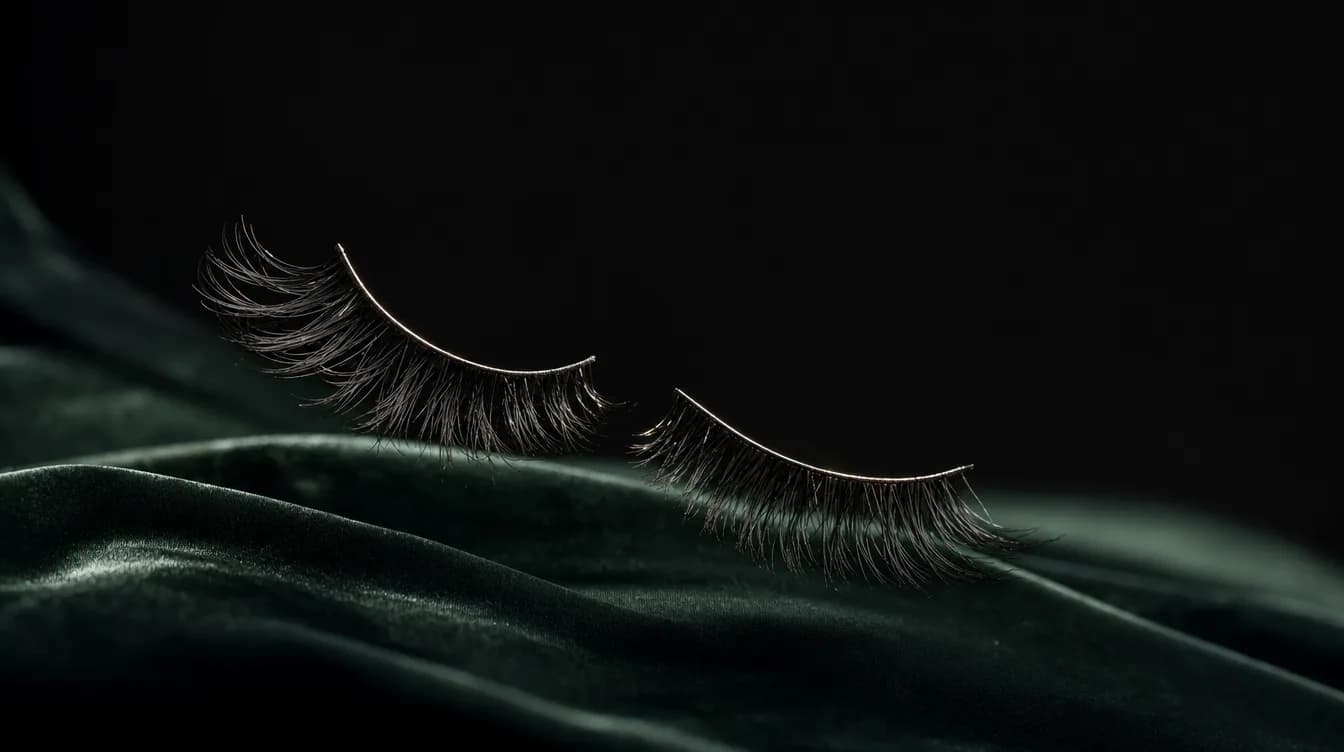
A few shed lashes on your fingertip after removing makeup is usually normal growth-cycle turnover, not damage.
The short answer
**Why are my eyelashes falling out** usually comes down to one of a few explainable causes: natural shedding on a roughly six-to-ten-week growth cycle, rough removal of false lash glue, an allergic reaction to that glue, traction from heavy falsies or extensions, or sleeping in eye makeup that clogs the follicles. Most people lose 1 to 5 lashes a day without even noticing, according to the American Academy of Ophthalmology. Sudden, patchy, or widespread loss, especially if it reaches the eyebrows or scalp, is different and worth a doctor's visit.
Why Are My Eyelashes Falling Out? What Counts as Normal
Why are my eyelashes falling out is one of those questions that feels alarming the moment you notice it, often right after wiping away a stray lash on your finger. In fact, a little shedding is completely normal. Eyelashes grow, rest, and fall out in cycles, much like the hair on your scalp, though on a far shorter timeline. For instance, a single lash typically lives for a matter of weeks before a new one growing in behind it pushes it out. Importantly, the real question is not whether you lose lashes, since everyone does, but whether you are losing more than usual, in clumps, or from one specific patch. In fact, that distinction is really the only one that matters here.
Picture a late night out: you tug off a set of strip lashes a little too fast at 2 a.m., and two of your own lashes come away stuck in the glue. That single rough night will not cause lasting damage on its own. However, repeating that habit week after week is a different story, because each pull adds a small amount of stress to the follicle underneath. Meanwhile, other causes, like an allergic reaction to lash glue or a flare of eyelid inflammation, can make loss feel sudden even though it actually built up gradually. Importantly, habits matter here far more than bad luck.
Why Are My Eyelashes Falling Out More Than They Used To?
A jump in shedding usually points to a change in habits or health rather than bad luck. For example, a new lash glue, a new mascara, a stressful season, or a skincare step applied too close to the lash line can all tip the balance. Similarly, illness or a nutrient gap can temporarily slow regrowth, since the body treats lash growth as low priority while it deals with something more pressing. Notably, the American Academy of Ophthalmology notes that losing 1 to 5 lashes a day is typical, so a sudden jump above that baseline is the real signal worth watching. In practice, consistency in your routine beats chasing any single fix.
The Natural Lash Growth Cycle, Explained
Every eyelash moves through three distinct phases, the same basic pattern seen in scalp hair, though compressed into a much shorter timeline. Notably, the anagen phase is active growth, when a lash lengthens for several weeks at a time before slowing down. Next comes the catagen phase, a short transition in which growth stops and the follicle begins to shrink back on itself. Instead, the telogen phase is a resting stage, and it ends when the old lash sheds to make room for a new one growing underneath it. A full cycle through all three phases runs roughly six to ten weeks from one lash to the next, according to beauty-industry reporting that cites the American Academy of Ophthalmology, and that timing varies a little from person to person.
That timeline helps explain why one bad night with lash glue is rarely the whole story behind noticeable thinning. Therefore, if a single lash falls out, the follicle beneath it was very likely already in its resting phase, due to shed soon regardless of how it was handled. Consequently, a lash pulled out mid-growth, before its natural telogen phase, is the kind of loss most linked to rough handling rather than to the ordinary cycle. In short, the growth cycle itself is simply the backdrop everything else in this guide plays out against, which is why timing matters as much as technique. For instance, someone who just finished a stressful week and also removed a stubborn set of falsies may reasonably wonder which factor explains the extra lashes on their pillow.
False Lash Glue: Rough Removal and Allergic Reactions
Removing false lashes is where a lot of avoidable damage happens, often in a rush. Peeling a strip lash off from the outer corner, especially before the glue has softened, pulls on whatever natural lashes are tangled into that glue line. For example, a rushed removal at the end of a long event is a common moment for exactly this kind of damage. Additionally, picking at leftover glue with fingernails tends to catch more natural lashes than people expect, because the glue binds across several lashes at once rather than one at a time. Moreover, that pattern repeats far more often than most people notice.
Softening the glue first, rather than pulling against it, protects your own lash line. A gentle, oil-based remover such as the Nabi Waterproof Makeup Remover at $6.99 is built to dissolve long-wear glue and waterproof formulas without a tugging motion. Similarly, the Makeup Remover Cleansing Towelettes at $2.99 work well for a quick, gentle swipe before bed. For instance, our guide on how to remove false eyelashes safely walks through the full technique step by step, which matters more for lash health than almost any other habit.
A lash glue allergy is a separate issue from rough handling, though it can look similar at first glance. Formaldehyde-based ingredients in some adhesives can trigger redness, swelling, itching, and inflammation along the lash line, and inflamed follicles shed lashes faster than calm ones. Instead, choosing a glue formulated for sensitive eyes, and patch testing a new one on the inner arm first, reduces that risk meaningfully. Our guide on lash glue for sensitive eyes covers safer options, and the S.he Clear Waterproof Eyelash Glue at $6.99 is a lower-irritation formula worth trying instead of a stronger, long-wear adhesive. That said, patch testing a new glue takes only a day.
Traction From Heavy Falsies and Lash Extensions
Traction alopecia is usually discussed in the context of scalp hair pulled tight by braids or ponytails, but a similar mechanism can affect the lash line. A 2022 clinical review on eyebrow and eyelash alopecia notes that trauma, including repeated pulling or sustained weight on the follicle, is among the recognized causes of lash and brow loss. Heavy lash extensions or thick strip lashes worn constantly add ongoing weight to a structure that was never designed to carry it. Over several months, that steady pull can weaken the follicle enough that lashes thin along the whole line, not just where the glue sat. Notably, that kind of damage builds slowly and quietly.
There is no guaranteed fix for genuine traction damage beyond removing the source of the pull and giving the follicle time, and that is an honest limitation worth stating plainly. No cosmetic product reverses damage already done to a follicle. Meanwhile, switching to a lighter option, like the Amina Human Hair Eyelashes - Style 11 at $3.99, reduces the ongoing weight while natural lashes recover. For more on this trade-off, do false eyelashes damage your natural lashes breaks down how wear frequency and lash weight both factor in.
Sleeping in Eye Makeup and Clogged Follicles
Mascara, eyeliner, and leftover glue residue left on overnight do not just smudge onto a pillow. Instead, they sit directly on the lash line and can clog the small oil glands at the base of each follicle. Clogged follicles are more prone to irritation, and irritated follicles are more likely to shed lashes out of their normal cycle. For example, waking up with crusty, flaky lash lines after a night of unremoved makeup is a common early sign worth paying attention to. Moreover, that crust is often the very first clue.
A simple fix is removing makeup fully before bed, every time, rather than only on nights that feel important. The Makeup Remover Cleansing Towelettes at $2.99 make that a one-step habit even when you are too tired for a full routine. Furthermore, using a clear formula like Super Lash Clear Mascara at $4.99 during the day means there is less pigment residue to fully remove at night in the first place. Consistency here matters more than any single product choice.
When Eyelash Loss Needs a Doctor's Attention
Most lash loss is explainable by shedding, technique, or habits, but some patterns point to something that needs medical attention instead. Sudden loss, patchy bald spots along the lash line, or loss that spreads to the eyebrows or scalp is different from ordinary thinning. According to Cleveland Clinic, lashes that come out in clumps or look noticeably thinner over a short period are not considered normal, and an ophthalmologist or dermatologist can help identify the underlying cause.
Blepharitis is one condition worth knowing about, since it directly affects the lash line. Mayo Clinic describes it as inflammation of the eyelids that can cause red, swollen, crusted lids and lashes that stick together, often alongside flaking or a gritty feeling. That inflammation along the follicle is exactly the kind of environment that encourages lash loss. Importantly, this guide offers cosmetic and technique advice, not medical treatment, so persistent redness, swelling, or patchy loss is a reason to see a doctor rather than to wait it out. In other words, cosmetics alone cannot resolve genuine inflammation.
How MissBiotics Can Help
We cannot fix a genuine medical cause of lash loss, and we are not going to pretend a cosmetic product can. What we can do is make the technique side easier to get right, starting with removal. The Nabi Waterproof Makeup Remover at $6.99 and the Makeup Remover Cleansing Towelettes at $2.99 both soften glue and makeup instead of letting you pull against it.
For application, the Celavi Eyelash Tool Set at $9.99 includes a comb and curler designed to handle lashes gently rather than tugging them into place by hand. If you are moving toward a lighter daily lash, the Amina Human Hair Eyelashes - Style 11 at $3.99 is a noticeably softer option than a dense, heavy strip. Meanwhile, a lower-irritation glue like the S.he Clear Waterproof Eyelash Glue at $6.99 is worth trying if a previous adhesive left your eyes red or itchy.
Browse our full Lashes range for more gentle options, or book a consultation if you want help building a lash routine around lashes that are currently thinning. Our guide on how to use an eyelash curler is also useful if heavy-handed curling is part of the pattern.
Conclusion
Why are my eyelashes falling out usually has a specific, fixable answer once you separate normal shedding from avoidable damage. A roughly six-to-ten-week growth cycle explains most day-to-day loss, while rough glue removal, an allergic reaction, long-term traction, or unremoved makeup explain most of the rest. Ultimately, the fix for those causes is gentler technique, not a dramatic overhaul of your whole routine. However, sudden, patchy, or spreading loss is a different situation, and it deserves a dermatologist or GP's attention rather than a new product.
Shop our Lashes range for gentler glue and removal options, or book a consultation to build a lash routine suited to lashes that need time to recover.
Questions, answered
Why are my eyelashes falling out all of a sudden?+
Sudden eyelash loss is usually linked to a specific trigger, such as an allergic reaction to lash glue, an illness, or an eyelid condition like blepharitis, rather than ordinary shedding. For example, glue allergies and eyelid inflammation can both cause lashes to loosen and fall out within days rather than gradually. If the loss is sudden, patchy, or paired with redness or swelling, it is worth seeing a doctor rather than waiting for it to resolve on its own.
Is it normal to lose eyelashes every day?+
Yes, losing a small number of eyelashes every day is normal and expected. According to the American Academy of Ophthalmology, most people shed 1 to 5 lashes a day as part of the natural growth cycle. Thinning, clumped loss, or bald patches are not part of that normal pattern and are worth paying attention to.
Can false eyelash glue cause permanent lash loss?+
Occasional rough removal is unlikely to cause permanent loss, but repeated pulling or a strong allergic reaction can damage the follicle over time. Lash glue contact with the follicle, combined with tugging during removal, is one of the more common avoidable causes of thinning. Switching to a gentler glue and a proper removal technique usually allows lashes to recover within a few growth cycles.
Do lash extensions make your natural lashes fall out?+
Lash extensions can contribute to lash loss when they are too heavy for your natural lashes or worn continuously without a break. The added weight creates ongoing traction on the follicle, a mechanism similar to traction alopecia on the scalp. Giving natural lashes regular breaks between sets reduces that risk.
Does sleeping in mascara make eyelashes fall out?+
Sleeping in mascara or eyeliner can contribute to lash loss by clogging the follicles along the lash line. Clogged, irritated follicles are more likely to shed lashes out of their normal cycle. Removing eye makeup fully before bed is a simple habit that reduces this risk.
When should I see a doctor about eyelash loss?+
See a doctor if lash loss is sudden, patchy, or spreading to the eyebrows or scalp, since those patterns suggest something beyond normal shedding or technique. Signs like redness, swelling, crusting, or lashes sticking together can point to blepharitis or another eyelid condition that needs treatment. A dermatologist or ophthalmologist can identify the underlying cause and the right next step.
Will my eyelashes grow back after they fall out?+
Yes, in most cases, lashes lost to normal shedding, rough removal, or temporary irritation grow back over the course of a few growth cycles, each roughly six to ten weeks. Lashes lost to long-term traction damage or a scarring eyelid condition may regrow more slowly or incompletely. If lashes are not growing back after a couple of cycles, a dermatologist can check for an underlying cause.
Sources & further reading