Glossy Shellac Lips: Summer 2026's High-Shine Lip
July 29, 2026 · 10 min read
Written by the MissBiotics Beauty Team — probiotic-inspired beauty specialists.
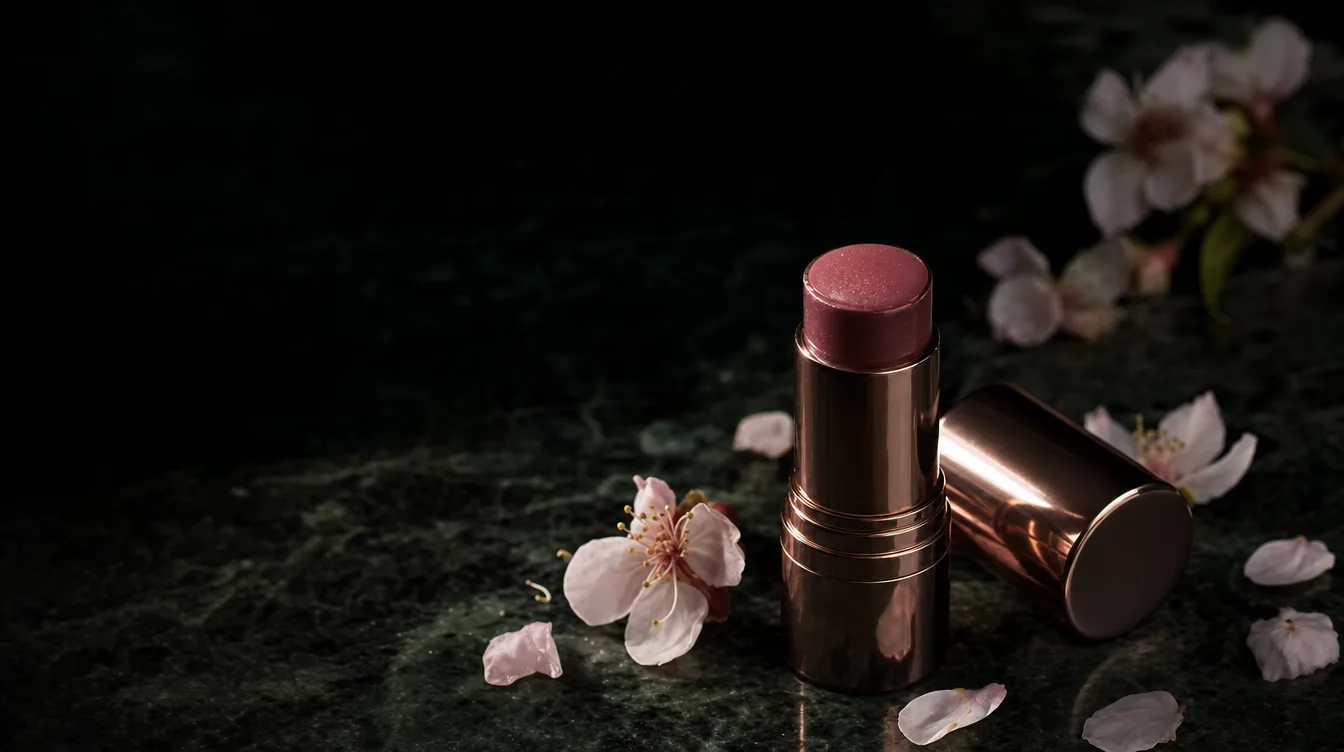
The short answer
Glossy shellac lips are a lacquered, wet-look lip built from a soft blurred liner and a thick, glassy gloss layered on top. You over-draw by about one millimeter, stipple and blur the outer third, then flood the center with two coats of high-viscosity gloss, waiting 20 to 30 seconds between them. It is a two-product look, and at MissBiotics the whole basket costs under $10.
Glossy Shellac Lips: The Lacquered Lip of Summer 2026
Glossy shellac lips are a lacquered, wet-look lip finish built from a soft blurred liner underneath and a thick, glassy gloss layered on top. The name borrows from furniture, not from nails. Shellac is a resin that dries to a hard, mirror-bright film, and that sealed surface is exactly what this mouth imitates. The lip looks coated rather than colored.
Furthermore, the industry called this one early. Summer 2026 trend reports quoted Dior backstage artist Jamie Coombes, NARS senior artist Jen Lyons and Aimee Connolly, and all three named shellac-looking lips as a headline finish of the season. Meanwhile, lacquered high-shine formats have been outperforming matte across the same months. The pendulum that swung hard toward velvet and blotted texture has swung fully back.
In practice the appeal is speed. Two products and roughly 60 seconds produce a lip that photographs like it was lit in a studio. Additionally, shine is forgiving. A glassy surface bounces light off texture instead of settling into it, which is why a lacquered mouth reads fuller than a flat one at the identical shade.
However, the technique matters more than the products do. A gloss applied straight onto bare lips just looks like a gloss. Therefore the blurred liner beneath it is not optional. That soft pigment is the half of the look that makes the shine read as deliberate rather than accidental.
- Two products: a soft pencil liner and a thick, high-viscosity gloss.
- About 60 seconds start to finish, with no mirror precision required.
- Shine sits in a thick layer, not a thin film. Thickness is the entire point.
- Realistic wear is two to three hours before the first reapplication.
Why Glossy Shellac Lips Are Outperforming Matte
Matte asked for perfect lips. This finish asks for none at all. A flat pigment sits tight against the surface and reveals every flake, crease and uneven edge, whereas a thick lacquer floods that texture and reflects straight over it. Furthermore, matte formulas tend to dry the lip surface, which creates the very texture they then expose. Therefore this is partly a comfort trend, and comfort is what keeps a finish on shelves past a single season.
The Two-Step Technique: Blur First, Lacquer Second
The method is soft blurred liner plus a thick glassy gloss, in that order, and reversing it does not work. The pencil builds shape. The gloss builds shine. Applying gloss first simply lifts the pigment off before it can settle.
Start with the liner. Draw just outside your natural border by roughly one millimeter, at the fullest part of the top and bottom lip only. Skip the corners entirely. Then turn the pencil onto its side and stipple inward across the outer third of each lip in short broken dashes.
Next, blur with pressure rather than motion. Press straight down with a fingertip, hold a beat, lift, then move along. Five to seven presses per lip is usually enough. Our full method for that base sits in the blurred lip look guide, and glossy shellac lips are essentially that same base with the shine turned all the way up.
Finally, lacquer. Load the applicator properly, because this is not the moment for a thin coat. Lay the gloss from the center outward, stop about a millimeter inside your blurred edge, then press your lips together once. Do not rub them. Rubbing thins the layer and kills the mirror you just built.
- Prep: balm for five minutes, then blot completely dry.
- Over-draw one millimeter, center of the lip only, never the corners.
- Stipple inward across the outer third with the side of the pencil.
- Blur with pressure, working outside to inside, in short taps.
- Flood the center with a thick gloss layer and press once.
The one-millimeter rule
One millimeter is the entire margin. For example, over-drawing by three millimeters gives you a costume mouth that no amount of shine will rescue. At our New York and London counters we hand people a pencil and ask them to draw the smallest line they believe is visible. That line is almost always the correct one. Anything larger reads as tracing rather than shaping, and lacquer only magnifies the error.
How Many Layers a Lacquered Lip Actually Needs
Two coats is the answer, and the second coat is where the shellac effect appears. One coat gives you shine. Two coats give you depth, because the second layer reflects off the first rather than off your lip.
Wait 20 to 30 seconds between them. Furthermore, that pause matters more than the formula does. A second coat laid onto a still-wet first coat merges into one thin film, whereas a brief set time lets the layers genuinely stack.
Three coats is the ceiling. Beyond that a gloss stops being glassy and starts being heavy, and heavy gloss migrates the moment the temperature climbs. Therefore we suggest two coats in July and three in December, which is a sensible seasonal rule for most people.
Viscosity is the property worth shopping for. A thin, watery gloss cannot hold a lacquered surface however many coats you apply. Meanwhile a thick jelly texture holds its own dome and stays exactly where you put it. Glossy shellac lips depend on that thickness far more than on any pigment.
- Coat one delivers shine. Coat two delivers depth. Coat three is for winter.
- Wait 20 to 30 seconds between coats so the layers stack rather than merge.
- Choose a thick jelly texture over a thin watery one every time.
- Keep the gloss a millimeter inside the blurred edge to control migration.
A quick counter test for viscosity
Tilt the wand and watch the bead. If a drop of gloss hangs on the applicator for two full seconds before it moves, the formula is thick enough for this look. However, if it runs straight back into the tube, it will slide off your lip just as readily. We run this test on every gloss before it goes into a customer's basket, and it takes about five seconds.
Shade Pairings That Read Lacquered, Not Sticky
Shade choice decides whether glossy shellac lips read expensive or dated. The rule is short: the liner sits one visible step deeper than the gloss, and both stay inside the same undertone family. Two shades drawn from different families read muddy under shine, not soft.
Clear gloss over a brown-rose liner is the safest version, and it is the pairing we sell most. For example, the pigment does all the shaping while the shine stays completely neutral. Additionally, a clear formula never shifts the liner shade, which removes the main way this look goes wrong.
Pink jelly over a deeper rose liner gives a fuller, softer, more youthful mouth. Meanwhile a matte red base under a clear lacquer produces the high-drama version, the patent red that dominated resort collections this season.
Glitter is a separate decision. A fine shimmer over a lacquered base extends the light without breaking the mirror, whereas a chunky glitter shatters it into fragments. Therefore keep any sparkle fine if you want the shellac effect to survive the room.
- Fair and cool: rosewood liner with a clear jelly gloss.
- Fair and warm: terracotta liner with a peach-toned lip oil, two coats.
- Medium: brown-rose liner with a pink jelly gloss.
- Deep: espresso or wine liner under a thick clear lacquer.
- Evening: matte red base, clear lacquer on the middle third only.
Making the Shine Survive a Hot Day
Here is the physics, honestly. The vermilion of your lip has no sebaceous or sweat glands of its own, and Cleveland Clinic's lip anatomy guidance is explicit that it draws moisture from sources such as saliva instead. Therefore anything you lay on it sits on a dry, mobile surface with nothing underneath to hold it in place.
Published barrier research on the lip describes a thin stratum corneum devoid of both salivary and sebaceous glands, and it measures markedly higher water loss on compromised lips. In practice that explains why a gloss vanishes faster in August than in February. Heat thins the oils in a formula, and thinner oils travel.
Prep is therefore not a nice-to-have. The American Academy of Dermatology advises a non-irritating lip balm with SPF 30 or higher before going outdoors, reapplied every two hours, and notes that consistent care usually brings noticeable improvement within two to three weeks. Furthermore, the AAD lists menthol, camphor, phenol and salicylic acid among the ingredients that irritate already-chapped lips.
The NHS recommends a balm containing petroleum jelly or beeswax, advises against picking at flaky skin, and says to see a GP if lips become hot, painful and swollen. Cleveland Clinic makes the same point about flakes: do not remove them with teeth or fingers, because that creates cracks. Smooth lips hold a mirror finish, while flaking lips scatter it into dull patches.
Practically, blot before you gloss rather than after, or you simply lift the shine straight back off. Additionally, carry the gloss rather than the liner on this look, because the shine goes first and the blurred pigment survives beneath it for hours.
- Balm for five minutes, blot dry, then line. Never gloss over wet balm.
- Exfoliate gently, at most twice a week, with a dedicated lip scrub.
- Use SPF 30 or higher on the lips outdoors and reapply every two hours.
- Reapply the gloss after eating instead of redrawing the whole lip.
Cosmetics soothe, they do not treat
We should be plain here. A gloss, a balm or a lip oil can hydrate, soften and comfort the lip surface, and that is genuinely useful before a lacquered finish. However, none of them treat, cure or prevent any condition. If your lips stay sore, cracked or swollen despite careful routine care, that is a conversation for a dermatologist or your GP rather than a shade recommendation from us.
What Glossy Shellac Lips Will Not Do
This finish has real limits, and we would rather name them than quietly sell around them.
It is not long-wear. Expect roughly two to three hours of true shine, and considerably less through a meal. A lacquered mouth and a three-course dinner are simply not compatible, so plan on reapplying at the table once or twice.
It is also not a matte substitute. Matte survives a coffee cup, a commute and a full working day in a way this never will. For example, if you need a lip that holds for eight hours without a single thought, a long-wear matte formula remains the correct tool for the job.
Volume is the other honest gap. Over-drawing by a millimeter and flooding the center with light creates an optical suggestion of fullness. Meanwhile, in profile, that suggestion disappears entirely, because light cannot change a silhouette.
Wind is the last one. A thick gloss catches hair, and glossy shellac lips on a breezy pier is a well-documented comedy. Furthermore, very oily formulas can migrate into the fine lines around the mouth in high heat, which is precisely why that millimeter of bare skin inside your blurred edge earns its place.
One customer at our London counter wanted this exact look for an outdoor July wedding. We talked her out of a full lacquer and into a matte red base with clear gloss on the center third only. She reapplied once, during the speeches, and the shape held from ceremony to dancing. That compromise is usually the right answer for anything running longer than four hours.
- Two to three hours of shine, and less if you eat or drink.
- Not windproof. Tie your hair back, or accept the consequences.
- No real volume. The fullness here is light, not lip.
- Not a replacement for matte on long, low-maintenance days.
How MissBiotics Can Help
This is a two-product basket, which is a large part of why glossy shellac lips spread so quickly this summer. At MissBiotics you can build the entire look for under ten dollars, and every piece of it sits in one category.
Shape first. The Nabi Lipliner Pencil in brown is $3.99 and soft enough to stipple without dragging, which is the single property a blurring pencil genuinely needs.
Then the lacquer. The Glazed Lip Gloss at $5.99 is the thickest formula we carry and the closest thing in our range to a true shellac finish. For a lighter spend, the Ultra Shine Lip Gloss in Clear Jelly is $2.99 and adds no color of its own, while the Pink Jelly version at the same price warms the center. For the patent-red evening lip, lay a Nabi Long Lasting Matte Lip in Red at $3.99 underneath and lacquer over the middle third.
If you want comfort ahead of maximum mirror, the S.he Lip Oil is $3.99 and the S.he Sparkle Lip Oil is $5.99. Meanwhile the S.he Diamond Bright Glitter Lip Gloss at $3.99 is the fine-shimmer route for evening, laid sparingly over a clear base.
Prep with the Lip Scrub at $3.99, used twice a week at most, followed by the S.he Lip Balms at $3.99. Browse the full MissBiotics lip collection if you want to build a proper shade wardrobe, or fold the whole sequence into one of our daily rituals so it never feels like a project.
For the liner half in detail, our blurred lip look guide walks through every pass. Additionally, if you are pulling a full summer look together today, our notes on whether press-on nails damage your nails and our evening skincare ritual cover the hands and the skin that sit either side of it.
Conclusion: Shine, Layered and Kept
Glossy shellac lips are the defining lip of summer 2026 because they deliver the most visible payoff for the least skill. Blur a soft liner across the outer third. Lay two thick coats of gloss from the center outward. Wait 20 to 30 seconds between them, and stop a millimeter inside your blurred edge.
They will not survive dinner and they will not replace a matte, and we would rather you knew that before you spent anything. What this finish will do is make a mouth look fuller, wetter and more considered in roughly 60 seconds, for about the price of a coffee.
Ready to build it? Explore the full MissBiotics lip range, or book a free virtual consultation and we will match your liner and your lacquer to your undertone in a single sitting.
Questions, answered
What are glossy shellac lips?+
Glossy shellac lips are a lacquered, wet-look lip finish built from a soft blurred liner and a thick, glassy gloss layered over it. The name comes from shellac resin, which dries to a hard mirror-like film. The finished mouth looks sealed and reflective rather than flatly painted.
How do you get a shellac lip effect at home?+
Line, blur, then lacquer in two coats. Over-draw your natural border by about one millimeter, stipple the pigment inward across the outer third, and press it soft with a fingertip. Then flood the center with a thick gloss, wait 20 to 30 seconds, and add a second coat.
How many coats of gloss does a lacquered lip need?+
Two coats is the standard, and three is the ceiling. The first coat delivers shine while the second creates the depth that reads as shellac, because it reflects off the layer beneath it. Leave 20 to 30 seconds between coats so they stack rather than merge into one thin film.
How long does a glossy shellac lip last?+
Expect roughly two to three hours of true shine, and less if you eat or drink. The gloss layer fades well before the blurred liner underneath does. Blot, then reapply the gloss alone rather than redrawing the whole lip, which takes about ten seconds.
Is a high-shine lip better than matte for summer 2026?+
High-shine is the dominant trend this season, but matte is still the better choice for long days. Lacquered formats have been outperforming matte in trend reports and on counters since spring. However, matte holds through meals and commutes in a way a thick gloss simply cannot.
Will a lacquered gloss make my lips look bigger?+
It creates the appearance of fullness rather than any actual volume. Light reflecting off a thick, domed gloss layer reads as a fuller curve, especially when a blurred liner has widened the shape by a millimeter. In profile, though, that effect disappears completely.
Can I wear a shellac lip on dry or chapped lips?+
Not well, because gloss pools around flakes and the mirror finish breaks into patches. Spend two weeks on a fragrance-free balm first and exfoliate gently no more than twice a week. If your lips stay sore, cracked or swollen, please see a dermatologist or your GP rather than covering it with a cosmetic.
Which gloss texture works best for this trend?+
A thick, high-viscosity jelly formula works best, not a thin watery one. Tilt the wand and watch the bead: if it hangs for two full seconds before moving, the formula will hold a lacquered dome on your lip. Thin glosses slip off the surface within minutes.
Sources & further reading
- American Academy of Dermatology — how to heal dry, chapped lips: SPF 30+ balm, reapply every 2 hours, avoid menthol, camphor, phenol and salicylic acid, improvement in 2 to 3 weeks
- American Academy of Dermatology — how to apply sunscreen, including an SPF 30 or higher lip balm and reapplying every two hours
- Cleveland Clinic — lip anatomy: the vermilion lacks sweat and oil glands and takes moisture from sources such as saliva
- Cleveland Clinic — chapped lips: choose petrolatum, glycerin or mineral oil, avoid camphor, eucalyptus and menthol, and never peel flakes with teeth or fingers
- NHS — sore or dry lips: petroleum jelly or beeswax balm, do not pick flaky skin, and see a GP if lips are hot, painful and swollen
- National Library of Medicine (PMC) — lip barrier study describing a thin stratum corneum devoid of salivary and sebaceous glands, with elevated transepidermal water loss on compromised lips