Makeup Brushes for Beginners: The Starter Kit
July 28, 2026 · 9 min read
Written by the MissBiotics Beauty Team — probiotic-inspired beauty specialists.
The short answer
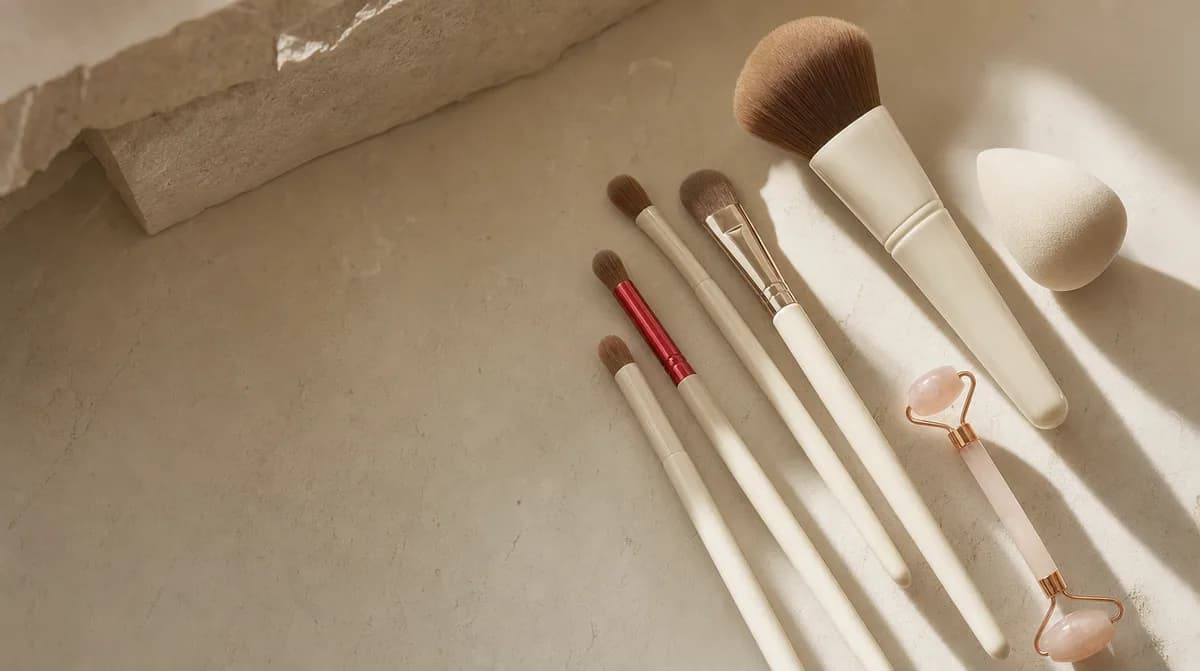
The makeup brushes for beginners worth owning come down to a five-brush core kit: one foundation brush, one powder brush, a flat shader, a fluffy blender, and an angled liner. Choose synthetic bristles for liquid and cream formulas, since they stay non-porous and wash clean. Add one beauty sponge for a dewy base, and wash everything on a 7 to 10 day rhythm. You can build the whole set for under $30 in 2026.
Makeup Brushes for Beginners: What You Actually Need
The truth about makeup brushes for beginners is freeing: you need far fewer than the shelves suggest. A wall of 32-piece kits looks essential, yet most of those brushes never leave the case. Instead, a small, well-chosen set handles almost every everyday face and eye look. Therefore we build every starter kit around five core brushes and a single sponge.
Think in jobs, not in counts. Your face needs two things: something to lay down base, and something to set or buff it. Meanwhile your eyes need three: a flat brush to pack on color, a fluffy brush to blend it, and an angled brush for liner and brows. Add one beauty sponge, and you can create nearly any daytime look.
Price is not the barrier people fear, either. You can assemble a complete beginner kit for under $30 in 2026, then upgrade one brush at a time. Furthermore, technique matters more than the tools themselves. A confident hand with three brushes beats a nervous one holding thirty.
- Foundation brush: lays down liquid or cream base evenly.
- Powder brush: sets makeup and sweeps on bronzer or blush.
- Flat shader: packs eyeshadow firmly onto the lid.
- Blending brush: softens harsh edges through the crease.
- Angled brush: draws liner and fills brows with precision.
- Beauty sponge: presses in a dewy, natural base.
Makeup Brushes for Beginners on Any Budget
You can build a beginner brush kit at almost any price point, and results barely differ at the entry level. A budget seven-piece set covers face and eyes in one box. Meanwhile a mid-range approach buys two or three quality brushes and adds the rest later. Both routes work well, so choose the one your wallet prefers.
Do not confuse spending with skill, either. An expensive brush in an unsure hand still streaks. However, a modest brush guided by a little practice looks polished. Therefore we tell every beginner to start cheap, learn the motions, and reinvest only where a tool truly earns it.
The 5-Brush Core Starter Kit, Explained
Here is the core kit in detail, brush by brush. Each one earns its place by doing a job no other brush does as well. Additionally, every piece below maps to a real tool you can buy today, so nothing here is theoretical.
Start with the face. A foundation brush spreads liquid base without soaking it up, while a soft powder brush sets that base and adds warmth. Then move to the eyes. A flat shader deposits pigment, a fluffy blender diffuses it, and an angled brush sharpens the finish with liner and brows.
One beginner skill matters as much as the brushes themselves: how you hold and angle them. Grip each brush toward the end of the handle rather than up near the bristles, because a relaxed hold lays color down softly. Meanwhile a tight, high grip presses too hard and leaves harsh edges you then have to blend out. Use small, light strokes and build in thin layers, instead of loading everything onto one heavy pass. For eyeshadow, tap the excess off the brush before it touches the lid, since fallout is far easier to prevent than to fix. Hold a blending brush almost flat and keep it moving in gentle circles. These simple habits turn the best makeup brushes for beginners into forgiving, reliable tools, and they cost nothing to learn.
- Face, base: a flat or lightly domed foundation brush for even coverage.
- Face, set: a fluffy powder brush for setting, bronzer and blush.
- Eyes, pack: a firm flat shader that presses color onto the lid.
- Eyes, blend: a soft, tapered brush that blurs edges in the crease.
- Eyes, define: a small angled brush for liner, wings and brows.
Where a starter set beats buying singles
A pre-built set removes the guesswork, which is exactly what a first-timer wants. The S.he Makeup Brush Set 7pc at $19.99 covers base, powder and eye work in one box. Meanwhile a dedicated eye kit like the Celavi Multi Eye Brush Set at $7.99 layers in extra shaders and blenders for detailed looks.
Together those two cost under $30 and cover everything in the list above. Furthermore, buying as a set keeps your bristle types consistent, so brushes behave predictably as you learn. Later, you can replace worn pieces one at a time rather than repurchasing the whole kit.
Brush vs Sponge: Which Wins for Foundation?
The brush-versus-sponge debate has no single winner, because each creates a different finish. A brush lays product down and builds fuller, more even coverage. A damp sponge presses product into the skin for a lighter, dewier result. Therefore the honest answer is simple: own one of each.
For a natural, second-skin base, reach for a damp sponge and bounce it rather than drag it. However, a sponge drinks up more product, so you use a little extra. For fuller coverage or a fast everyday face, a brush is quicker and more economical. Whichever you choose, the base only looks right when the shade matches, so start by finding your foundation shade.
- Brush strengths: fuller coverage, less product waste, speed.
- Sponge strengths: dewy, sheer, skin-like finish under the eyes.
- Use a brush to apply, then a damp sponge to press and blend.
- Sponges hold moisture, so they need washing far more often than brushes.
Sponges are cheap enough to buy in multipacks
Buying sponges in sets solves the drying problem outright. The Celavi Macaron Beauty Sponge Set at $5.99 lets one dry while another works. Meanwhile the Celavi 8pcs Flower Blending Sponge at $4.99 adds smaller shapes for under the eyes and around the nose.
Storage matters as much as washing. The Premium Beauty Sponge & Holder Set at $6.99 keeps a damp sponge in moving air rather than a sealed pouch. Additionally, the American Academy of Dermatology advises cleaning sponges after every use, which our guide on how often to clean makeup brushes explains in full.
Synthetic vs Natural Bristles: The Real Difference
Bristle type sounds technical, yet the rule behind it is short. Synthetic bristles are non-porous, so they glide liquids and creams across skin without absorbing them. Natural bristles, made from animal hair, have a textured cuticle that grips loose powder beautifully. Therefore the formula in your hand should decide the fiber on your brush.
For a beginner in 2026, synthetic bristles are the sensible default. They handle foundation, concealer and cream blush, they cost less, and they wash clean quickly. Furthermore, today's quality synthetics pick up powder well too, so one synthetic set can cover both wet and dry work. Synthetic brushes are also vegan and cruelty-free, which matters to many first-time buyers.
Natural-hair brushes are a later, optional upgrade rather than a starting point. They excel at diffusing loose powder, but they cost more and demand gentler washing. However, most beginners never miss them. Master a synthetic kit first, then add a natural blending brush only if your looks call for one.
- Synthetic: best for liquids, creams and concealer; easy to wash; vegan.
- Natural: best for loose powder and soft blending; pricier; needs care.
- Unsure? Start all-synthetic, since it covers the widest range of formulas.
Matching the brush to the formula
Read your products and match the brush accordingly. A liquid foundation wants a synthetic Foundation Brush at $24 for smooth, streak-free coverage. A creamy concealer suits a small, firm Concealer Brush at $15 for targeted work under the eyes.
Dry formulas prefer a softer touch. A loose setting powder or bronzer plays nicely with a wispy Celavi Premium Fan Brush at $5.99, which lays down a light, diffused veil. Meanwhile inexpensive foam tips like the Celavi 6pc Eyeshadow Applicators at $2.99 press shimmer onto the lid with zero fallout.
How to Care for Your First Brushes
Good care makes cheap brushes last and expensive brushes worth the outlay. Even the best makeup brushes for beginners fail without a basic routine. Wash your brushes every 7 to 10 days, the interval the American Academy of Dermatology recommends, and rinse sponges after nearly every use.
The method itself is gentle and deliberately boring. Use lukewarm water and a mild shampoo, keep water away from the metal ferrule, and lather until the runoff turns clear. Then reshape each head and lay it flat to dry, with the tips hanging over the counter edge. However, never stand a wet brush upright, since water sinks into the glue and loosens the bristles.
Hygiene is worth the ninety seconds it takes. One study of 57 cosmetic brushes found most carried bacteria, yet 44 percent of people admitted they rarely cleaned their tools. That is a hygiene gap, not a diagnosis. Nonetheless, clean brushes simply apply makeup better, because product buildup drags color and creates streaks.
- Wash wet-formula brushes weekly; powder brushes roughly monthly.
- Lather with lukewarm water and gentle shampoo, tips angled down.
- Rinse until the water runs completely clear, then squeeze dry.
- Dry flat with tips off the counter edge, never upright in a cup.
Build the habit with a spare set
Owning doubles makes wash day painless, because a spare covers you while the rest dry. The Celavi 6pc Eyeshadow Applicators at $2.99 are cheap enough to rotate or simply replace. Meanwhile the Blending Sponge Set at $14.99 gives you enough sponges that you never reach for a damp one.
Keep clean tools clean when you travel, too. A vented case protects a freshly washed kit, which is exactly what our travel makeup bag essentials guide recommends. Additionally, storing brushes bristle-up in open air between uses keeps dust off the heads.
How MissBiotics Can Help You Start
Our probiotic-inspired philosophy runs through our tools as much as our skincare. Balanced skin does better with a few clean, well-chosen brushes than with a drawer full of forgotten ones. Therefore we keep our starter advice short, honest and easy to act on.
For most beginners, a single purchase does the job. The S.he Makeup Brush Set 7pc at $19.99 covers face and eyes together in one box. Meanwhile the Celavi Multi Eye Brush Set at $7.99 adds finer eye control. For base, pair a synthetic Foundation Brush at $24 with a Celavi Macaron Beauty Sponge Set at $5.99.
Want to see these tools in action before you buy? Explore the full Tools range, browse Face for what goes on top, or book a consultation and we will help you choose. You can also watch the brushes work in our glazed eyeshadow look and how to apply strip lashes tutorials.
Start Your Kit With Five Brushes
The whole answer fits in one sentence. The makeup brushes for beginners worth owning are five: a foundation brush, a powder brush, a flat shader, a fluffy blender, and an angled liner. Add a single sponge, choose synthetic bristles, and wash everything on a 7 to 10 day rhythm.
So begin small and build with confidence. Pick the set that fits your budget from our Tools range, explore our rituals to see how we use them, or book a consultation if you would rather we chose alongside you. Your first five brushes are all you need to start.
Questions, answered
What makeup brushes does a beginner really need?+
The makeup brushes for beginners you truly need come down to five: a foundation brush, a powder brush, a flat eyeshadow shader, a fluffy blending brush, and a small angled brush for liner and brows. Add one beauty sponge for a dewy base. Together, that six-piece kit handles almost every everyday look.
Are synthetic or natural brushes better for beginners?+
Synthetic brushes are better for most beginners. They are non-porous, so they handle liquids and creams cleanly, they cost less, and they wash easily. Furthermore, they are vegan and cruelty-free. Natural-hair brushes grip loose powder well, but they are a later, optional upgrade rather than a starting point.
Is a brush or sponge better for foundation?+
Both work, and they give different finishes. A brush builds fuller, more even coverage and uses less product. A damp sponge presses in a lighter, dewier, skin-like base. Therefore many people apply with a brush, then press with a sponge. For a first kit, one of each is ideal.
How many makeup brushes do I actually need to start?+
Five brushes plus one sponge cover almost everything a beginner needs. Two brushes serve the face, three serve the eyes, and the sponge presses in a natural base. Bigger sets look impressive, but most of those extra brushes go unused. Start small, then add pieces only as your looks grow.
Do cheap makeup brushes work?+
Yes, cheap brushes work well at the beginner level. A budget seven-piece set applies foundation and eyeshadow perfectly for someone still learning. Technique matters far more than price here. However, quality does show in longevity, so reinvest in the one or two brushes you reach for daily as your skills grow.
How often should I wash my makeup brushes?+
Wash your brushes every 7 to 10 days, the interval the American Academy of Dermatology recommends. Clean brushes used with liquids and creams weekly, and powder brushes roughly monthly. Rinse beauty sponges after nearly every use, since damp foam holds moisture and buildup. Lay everything flat to dry, never upright.
How much should a beginner spend on makeup brushes?+
You can build a complete beginner kit for under $30 in 2026. A seven-piece set at $19.99 and a small eye set at $7.99 cover face and eyes together. Add an inexpensive sponge multipack, and you are ready. Spend more only once you know which brushes you use every day.
Sources & further reading
- American Academy of Dermatology — supports the 7 to 10 day washing frequency, the lather-and-rinse method and the flat-drying instruction that protects ferrule glue
- Cleveland Clinic — supports the frequency split by tool type: weekly for wet-product brushes, every two weeks for eye brushes, and monthly for powder brushes
- International Journal of Microbiology (PMC) — supports the 57-brush contamination study, the species breakdown and the survey finding that 44 percent of people rarely clean their brushes
- American Academy of Dermatology — supports cleaning sponges after every use, the three-month mascara replacement timeline and general makeup hygiene advice